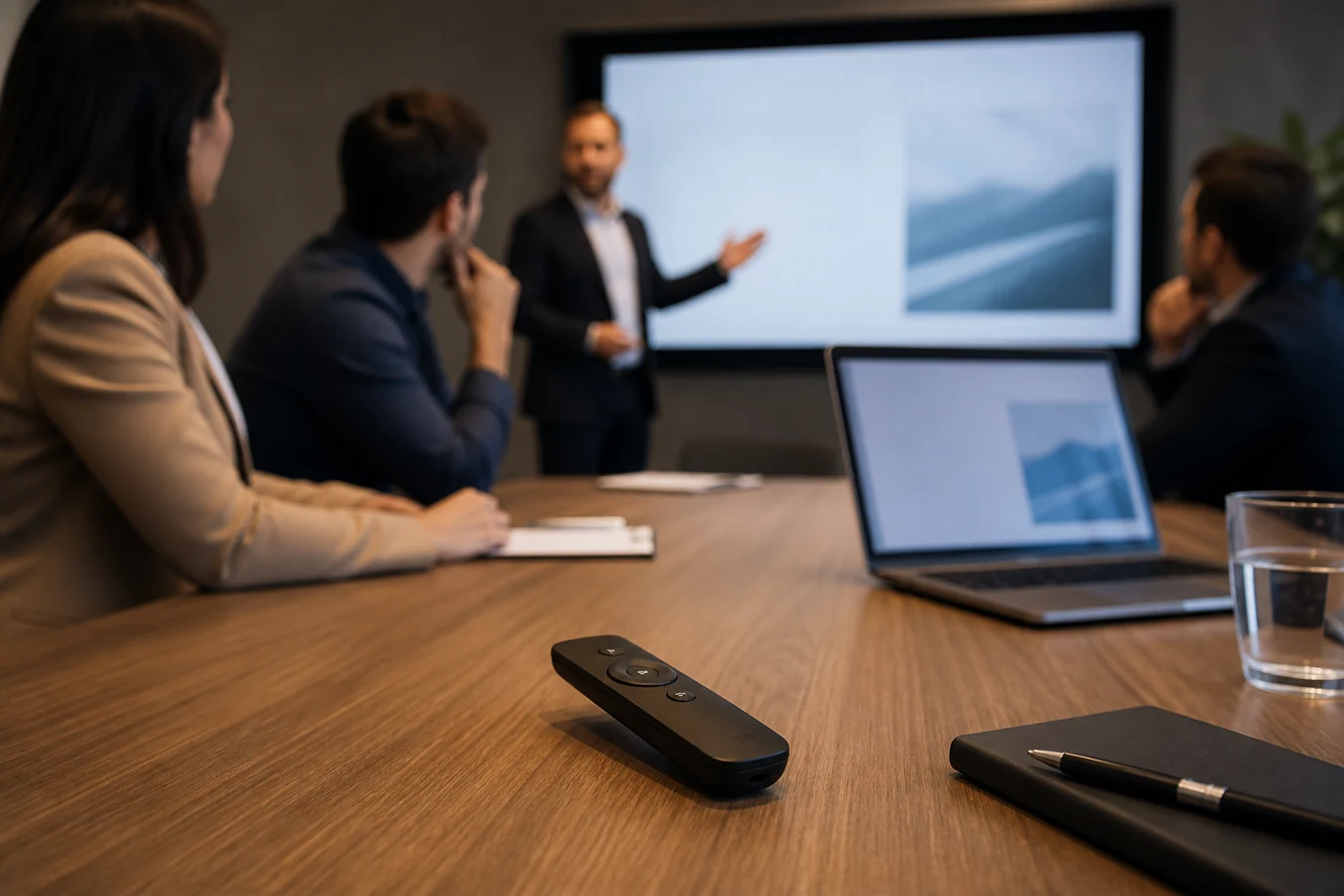
Presentation workflow guide
Use this guide alongside the LeStallion wireless presentation remote shortlist to choose a clicker around real rooms, real laptops, and real speaking habits.
Test from the real speaking spot.
Find forward/back by touch.
Store receiver and adapters together.
Know whether laser shows on the screen.
Pack spares or charging cable.
Test PowerPoint, Keynote, Slides, or PDF decks.
Range is about the room, not the number
A wireless presentation remote should work from the real speaking position: beside a conference table, at the front of a classroom, across a training room, or while walking during a workshop. The advertised range matters less than interference, receiver placement, and where the laptop sits.
Test the clicker from the furthest natural speaking point, not only from the desk. If the presenter has to aim at the laptop or step back toward the podium, the setup will feel fragile.
The practical check is simple: rehearse with the same room, laptop, display, adapter, and slide software that will be used during the real presentation.
Receiver storage prevents day-of problems
USB receivers and adapters are easy to lose. A good presentation kit has a reliable place for the dongle, a clear USB-A or USB-C plan, and a backup adapter if the laptop ports are limited.
Before buying, check the laptops used in the office. A remote that assumes USB-A may be awkward for a USB-C-only ultrabook unless the adapter lives in the same case.
The practical check is simple: rehearse with the same room, laptop, display, adapter, and slide software that will be used during the real presentation.
Laser pointer use depends on the display
Laser pointers can be useful on projection screens but may not show on some TV displays, shared screens, or recorded webinars. Digital pointer tools may work better for hybrid meetings.
Choose the remote around the actual presentation environment. A bright laser is not automatically useful if the team mostly presents through video calls or large monitors.
The practical check is simple: rehearse with the same room, laptop, display, adapter, and slide software that will be used during the real presentation.
Speaker flow matters more than feature count
The remote should help the presenter move naturally. If it is too slippery, too complicated, or too easy to misclick, it adds anxiety. Consider grip, weight, tactile feedback, and whether the presenter carries a microphone or notes.
A good remote disappears during the talk. The speaker feels the slide change, keeps eye contact, and does not have to narrate a device problem.
The practical check is simple: rehearse with the same room, laptop, display, adapter, and slide software that will be used during the real presentation.
Battery routine should be boring and visible
Presentation remotes fail at the worst time when charging or spare batteries are not part of the routine. Rechargeable models need a visible charging habit. Battery models need spares in the travel kit.
For shared offices, label the remote case and keep the cable, receiver, and adapter together. The system matters as much as the hardware.
The practical check is simple: rehearse with the same room, laptop, display, adapter, and slide software that will be used during the real presentation.
Conference room setup changes the best choice
A small huddle room, classroom, boardroom, and event space each create different remote problems. Receiver line of sight, laptop location, projector connection, and distance from the screen all affect reliability.
Walk through the room before the meeting. Put the laptop where it will actually sit, connect the display, and test slide advance from every place the speaker may stand.
The practical check is simple: rehearse with the same room, laptop, display, adapter, and slide software that will be used during the real presentation.
Travel presenters need a kit, not just a remote
A travel presenter should think about case size, dongle storage, USB-C adapters, spare battery or cable, and compatibility with PowerPoint, Keynote, Google Slides, and PDF decks.
The best kit is small enough to stay packed. If the cable or receiver floats loose in a bag, it will eventually be missing when the talk starts.
The practical check is simple: rehearse with the same room, laptop, display, adapter, and slide software that will be used during the real presentation.
Use product rankings after defining the venue
Product shortlists are most helpful after the presenter knows the room size, laptop ports, display type, software, and travel needs. Otherwise the top-rated remote may solve the wrong problem.
Use this setup guide first, then compare specific picks on the LeStallion list with a clearer idea of what will make presentations feel seamless.
The practical check is simple: rehearse with the same room, laptop, display, adapter, and slide software that will be used during the real presentation.
Rehearsal catches remote problems early
Run at least one full deck with the remote, not just three test clicks. Try starting, going backward, blanking the screen if supported, and recovering from a wrong click.
This rehearsal also reveals whether animations, embedded videos, and speaker notes behave properly. A reliable remote is part of a full presentation workflow.
The practical check is simple: rehearse with the same room, laptop, display, adapter, and slide software that will be used during the real presentation.
Hybrid presentations need screen-share awareness
For hybrid meetings, the audience may be both in the room and online. A laser pointer may help people in the room but not viewers watching a screen share. The presenter may need annotation tools or cursor highlighting instead.
Check how the remote interacts with the presentation software while screen sharing. Some advanced functions are less important than dependable slide advance and a clear on-screen pointer.
The practical check is simple: rehearse with the same room, laptop, display, adapter, and slide software that will be used during the real presentation.
Related reading
Compare specific products on the wireless presentation remote recommendations, then review the previous cloud page on noise-cancelling earbuds for office use.
Deep-dive support pages
Focused notes for slide control range.Laser Pointer Use
Focused notes for laser pointer use.USB-C and Dongles
Focused notes for usb-c and dongles.Speaker Notes Flow
Focused notes for speaker notes flow.Conference Room Setup
Focused notes for conference room setup.Travel Presentation Kit
Focused notes for travel presentation kit.